What is Lip Sync? Definition, Meaning, and How AI is Revolutionizing It
Everything you need to know about lip synchronization — from history to cutting-edge AI technology
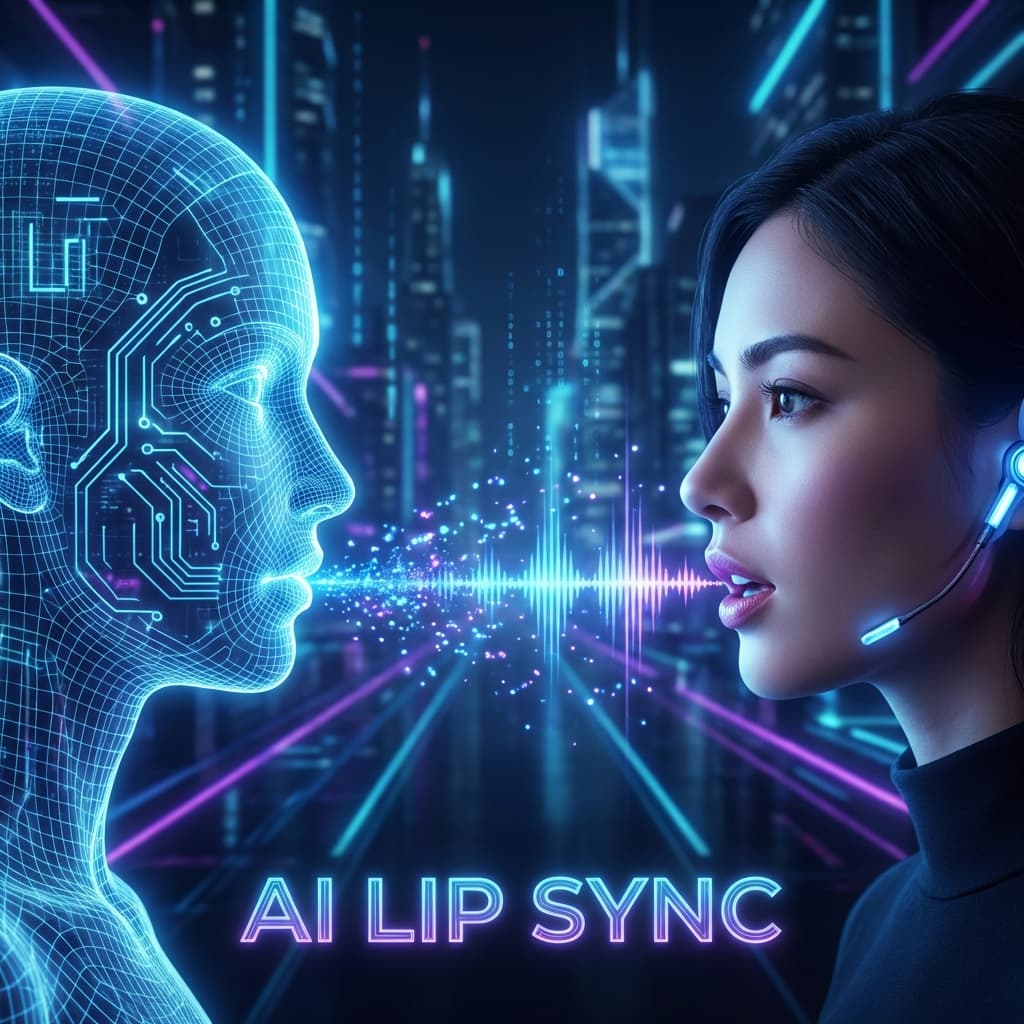
Lip Sync Definition
Lip sync (also written as "lip-sync," "lipsync," or "lip synch") is the synchronization of lip movements with pre-recorded or live audio. The term comes from combining "lip" and "synchronization."
In simpler terms, lip sync means making someone's mouth movements match the audio they appear to be speaking or singing.
What Does "Lip Sync" Mean?
The meaning of lip sync varies by context:
In Entertainment & Music
When a performer moves their lips to match a pre-recorded song or spoken audio rather than performing live. Artists may lip sync during:
- Live TV performances
- Music videos
- Award shows
- Large stadium concerts
In Film & Animation
The process of matching character mouth movements to voice recordings:
- Dubbing foreign films into different languages
- Animated character dialogue
- Voice-over replacement in post-production
In Technology & AI
The process of using artificial intelligence to automatically generate lip movements that match any audio input:
- Video dubbing and localization
- Creating talking avatars
- Animating photos
- Virtual presenters
The History of Lip Sync
Early Days: Music Videos & TV
Lip syncing began in entertainment as a practical solution:
- 1960s: The Monkees lip-synced on their TV show
- 1980s: MTV era popularized music video lip sync
- 1990s: Milli Vanilli scandal brought controversy to lip sync in live performance
Film Dubbing Era
The film industry has relied on lip sync for decades:
- Dubbing actors for foreign markets
- Replacing dialogue in post-production
- Adding singing voices to non-singing actors
Digital Revolution
Modern technology transformed lip sync:
- 2010s: Early deepfake experiments
- 2017: Academic breakthroughs in AI lip sync
- 2020s: Consumer-accessible AI tools emerge
How Does Lip Sync Work?
Traditional Lip Sync (Manual)
- Recording: Audio is recorded separately
- Playback: Performer listens via earpiece
- Performance: Performers match their lip movements to the audio
- Editing: Video is edited to sync perfectly
Digital Lip Sync (Animation)
- Voice Recording: Actors record dialogue
- Phoneme Mapping: Identify mouth shapes for each sound
- Animation: Animators create matching mouth movements
- Refinement: Fine-tune timing and expressions
AI Lip Sync (Modern)
- Audio Analysis: AI identifies phonemes, timing, and speech patterns
- Face Detection: AI maps facial landmarks and features
- Motion Generation: Deep learning models generate realistic lip movements
- Video Synthesis: AI produces a seamless output video
Types of Lip Sync Technology
1. Image to Video (Photo Animation)
Input: Static image + Audio
Output: Video of the image "speaking"
Resolution: Supports up to 4K (360p, 480p, 720p, 1080p, 2K, 4K)
Use Cases:
- Talking portraits
- Singing photos
- AI Avatar creation
- Historical figure animation
At LipSync Studio: Use the Image Lip Sync model
2. Video to Video (Video Dubbing)
Input: Existing video + New audio + Optional mask image
Output: Video with lip movements matching new audio
Resolution: Supports up to 4K (360p, 480p, 720p, 1080p, 2K, 4K)
Features:
- Mask Support: Upload a mask image to exclude specific characters from lip-syncing. This is useful for videos with multiple people where only certain characters should speak.
Use Cases:
- Language dubbing
- Voice replacement
- Audio quality improvement
- Content localization
- Selective character dubbing in group scenes
At LipSync Studio: Use the Video Lip Sync model
3. Multi-Speaker Lip Sync
Input: Image with two faces + Separate audio tracks for left and right speakers
Output: Video with each face lip-synced to their respective audio
Resolution: Supports up to 4K (360p, 480p, 720p, 1080p, 2K, 4K)
Features:
- Dual Speaker Support: Two people's lip movements are synchronized separately to their own audio tracks.
- Speaking Order Options:
- Meanwhile: Both speakers talk simultaneously
- Left → Right: Left speaker first, then right speaker
- Right → Left: Right speaker first, then left speaker
Use Cases:
- Podcast videos
- Interview simulations
- Dialogue scenes
- Educational content
At LipSync Studio: Use the Multi-Speaker Lip Sync model
AI Lip Sync: The Technology Explained
How Does AI Create Lip Sync?
Modern AI lip sync uses several sophisticated technologies:
1. Deep Learning
Neural networks trained on millions of video frames learn:
- How lips move for different sounds
- Natural facial expressions
- Head movement patterns
- Blinking and micro-expressions
2. Phoneme Recognition
The AI identifies individual speech sounds (phonemes):
| Phoneme | Example | Lip Shape |
|---|---|---|
| /p/, /b/, /m/ | "pat," "bat," "mat" | Lips closed |
| /f/, /v/ | "fat," "vat" | Lower lip to teeth |
| /θ/, /ð/ | "that" | Tongue between teeth |
| /s/, /z/ | "sat," "zoo" | Teeth close together |
| Vowels | "ah," "ee," "oo" | Various open shapes |
3. Face Synthesis
Generative models create realistic face animations:
- Preserve identity and appearance
- Generate natural motion
- Maintain temporal consistency
- Handle various face angles
What Makes Good AI Lip Sync?
| Factor | Description |
|---|---|
| Accuracy | Lips precisely match audio phonemes |
| Naturalness | Expressions look human, not robotic |
| Consistency | No flickering or artifacts |
| Identity Preservation | Person still looks like themselves |
| Temporal Coherence | Smooth motion between frames |
Applications of Lip Sync Technology
Entertainment Industry
- Film Dubbing: Localize movies for international markets
- Music Videos: Create visual content for songs
- Animation: Bring characters to life
- Gaming: Realistic character dialogue
Marketing & Business
- Personalized Videos: Localized marketing at scale
- Virtual Spokespersons: Consistent brand representation
- Product Demos: Multilingual tutorials
- Training Videos: Corporate education content
Social Media & Content Creation
- Viral Content: Talking photos and memes
- Singing Videos: Make anyone "sing" any song
- Educational Content: Animated explainers
- Podcasts: Turn audio into video
Accessibility
- Sign Language: Add interpreters to content
- Visual Speech Aids: Help hearing-impaired audiences
- Language Learning: Practice pronunciation visually
Personal Use
- Memory Preservation: Animate family photos
- Special Messages: Birthday and greeting videos
- Creative Projects: Art and storytelling
The Ethics of Lip Sync Technology
Positive Applications
✅ Language localization and accessibility
✅ Creative expression and entertainment
✅ Educational content creation
✅ Preserving and animating historical archives
✅ Enabling new forms of communication
Potential Concerns
⚠️ Misinformation and fake news
⚠️ Non-consensual content creation
⚠️ Identity fraud
⚠️ Trust erosion in video media
Responsible Use Guidelines
- Obtain consent when using others' likenesses
- Disclose when content is AI-generated
- Don't create harmful or misleading content
- Respect copyright and intellectual property
- Consider the impact on individuals depicted
Lip Sync vs. Related Terms
Lip Sync vs. Dubbing
| Lip Sync | Dubbing |
|---|---|
| Matching lip movements to audio | Replacing audio in video |
| Can be live or recorded | Always post-production |
| May not change the audio | Changes the audio track |
| Technology can modify video | Traditionally only changes audio |
Lip Sync vs. Deepfake
| Lip Sync | Deepfake |
|---|---|
| Focuses on mouth movements | Can change entire face |
| Primary goal: audio matching | Primary goal: face swapping |
| Often single-person | Often transfers one face to another |
| Widely accepted use cases | Often controversial |
Lip Sync vs. ADR (Automated Dialogue Replacement)
| Lip Sync | ADR |
|---|---|
| Visual modification | Audio recording technique |
| Changes video | Records new audio |
| AI or manual | Always performed by humans |
| Matches lips to audio | Matches audio to existing lips |
How to Use AI Lip Sync
For Videos
- Upload your source video
- Upload or generate new audio
- Let AI process the video
- Download your lip-synced result
Best for: Dubbing, voice replacement, localization
For Images
- Upload any face image
- Add speaking or singing audio
- AI generates a talking video
- Share your animated photo
Best for: Talking photos, avatars, creative content
For Podcasts & Dialogues
- Upload image with two people
- Add audio for each speaker
- Set the speaking order
- Generate multi-speaker video
Best for: Podcast videos, interviews, dialogues
Frequently Asked Questions
Is lip syncing cheating?
In music, live lip sync is controversial. In content creation, AI lip sync is a tool — how you use it matters.
Can AI lip sync be detected?
Sometimes. Detection technology is advancing alongside generation technology. Always be transparent about AI usage.
Does lip sync work in all languages?
Yes! AI lip sync works with any language because it reads audio phonemes, not semantic meaning.
Is lip sync legal?
The technology is legal. However, using someone's likeness without permission may violate their rights. Always use ethically and with consent.
How accurate is AI lip sync?
Modern AI achieves very high accuracy, especially with clear audio and front-facing faces. Quality continues to improve rapidly.
The Future of Lip Sync
Emerging Trends
- Real-time lip sync for live streaming and video calls
- Emotion-aware generation matching tone and sentiment
- Full-body integration with gestures and movements
- Interactive applications in gaming and VR
- Higher resolutions up to 8K and beyond
Industry Impact
- Film industry embracing AI dubbing
- Podcasters creating video content easily
- Marketers producing personalized video at scale
- Educators building engaging visual lessons
Get Started with AI Lip Sync
Ready to experience the power of AI lip sync technology?
LipSync Studio offers three powerful models:
| Model | Best For | Input |
|---|---|---|
| Image Lip Sync | Photos, avatars, creative content | Image + Audio |
| Video Lip Sync | Dubbing, localization, voice replacement | Video + Audio |
| Multi-Speaker | Podcasts, interviews, dialogues | Image + 2 Audio tracks |
Start free — log in to receive 16 credits daily and create your first lip sync video in minutes.
Last updated: January 2026
Keywords: what is lip sync, lip sync meaning, lip sync definition, lipsync explained, AI lip sync, lip synchronization, what does lip sync mean, lip sync technology, audio visual synchronization
Recommended Reading
- How to Lip Sync Video: The Complete Guide to AI-Powered Video Lip Synchronization
Transform any video with perfect lip sync using cutting-edge AI technology
- How to Make a Picture Talk and Sing: Best AI Talking Photo Generator Guide
The ultimate tutorial on how to lip sync picture, make a picture sing, and create stunning talking photo animations
- AI Podcast Generator: Create Podcast Videos with Multi-Speaker Lip Sync Technology
The ultimate AI podcast generator that creates professional multi-speaker podcast videos from a single image using advanced lip sync technology